
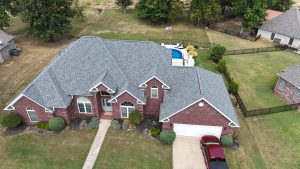
1. Curling, Cracking, or Missing Shingles
If you notice shingles curling at the edges, cracking, or completely missing, your roof system may be weakening.
What this means:
- Shingles may be reaching the end of their lifespan
- Wind may have broken the seal
- Water can begin getting underneath the system
Even one missing shingle can allow water intrusion.
What to do:
Inspect from the ground using binoculars or a drone with a good camera. Avoid climbing onto steep or damaged roofs.
2. Granules in Your Gutters
Asphalt shingles are coated with protective granules. If you see excessive granules in your gutters, your shingles may be deteriorating.
What this means:
- UV protection is wearing away
- Shingles are aging or damaged
- Roof becomes brittle and leak-prone
Some granule loss is normal on a new roof. Heavy accumulation years later is not.
What to do:
Check gutters during routine cleaning. If granules are excessive, schedule an inspection.
3. Water Stains on Ceilings or Walls
Brown stains, bubbling paint, or soft drywall inside your home are major red flags.
What this means:
- Water has already made it past your roofing system
- The leak may still be active
- Insulation and framing could be affected
By the time interior damage appears, the roofing issue has likely existed for some time.
What to do:
Take photos. If accessible, check the attic for damp insulation or stained decking. Then schedule a professional evaluation.
4. Sagging Rooflines
A sagging or dipping roofline can signal structural concerns.
What this means:
- Decking deterioration
- Long-term moisture damage
- Storm-related structural stress
This is not a “wait and see” issue.
What to do:
Stand back from your home and look at the ridgeline. If it appears uneven or dipped, have it evaluated promptly.
5. Flashing Damage Around Chimneys & Vents
Flashing is the metal installed around chimneys, vents, valleys, and wall transitions to prevent leaks.
- Rusted or lifted flashing allows water in
- Sealants may have failed
- Improper installation can cause hidden leaks
Flashing failures are one of the most common causes of roof leaks—even when shingles look fine.
What to do:
Visually inspect from the ground. If you’ve had prior repairs, confirm flashing was properly integrated.
Safety Recommendations for Homeowners
Before inspecting your roof:
- Stay off steep or wet roofs
- Use binoculars or a drone instead of climbing
- Wear slip-resistant shoes when walking around the home
- Avoid inspections during high winds or storms
- When unsure, call a licensed professional
Your safety is more important than any inspection.
Final Thoughts
Catching small issues early can:
- Prevent interior damage
- Extend the life of your roof
- Save thousands in long-term repair costs
If you notice any of these warning signs, consider having your roof professionally evaluated before storm season intensifies.
