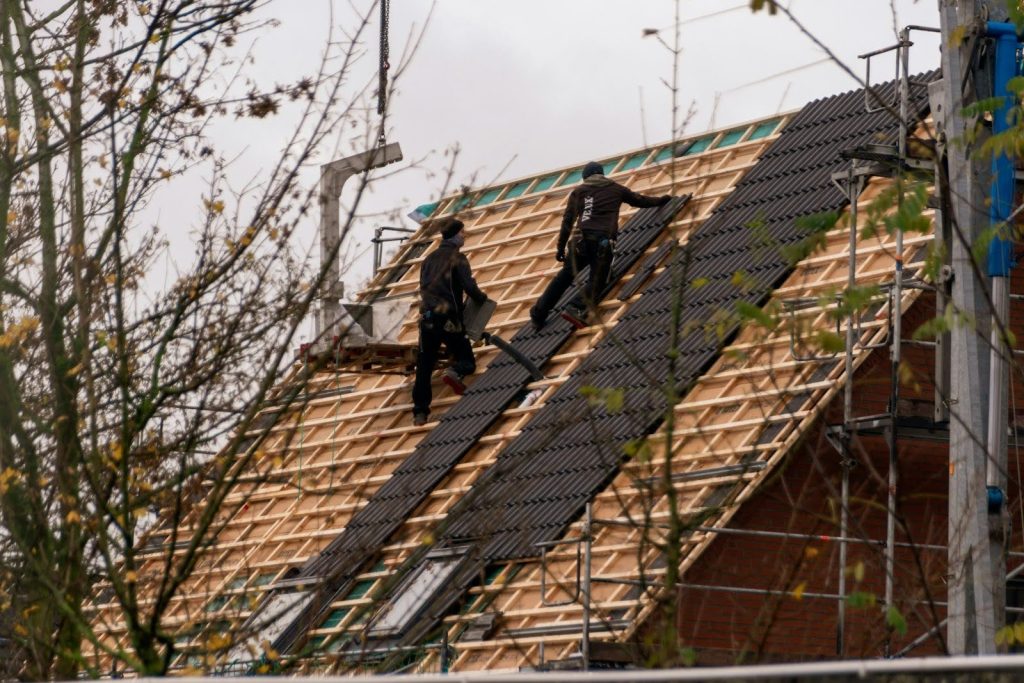
Decking: the foundation of the roof
Roof decking is the wood surface fastened to the rafters or trusses. It supports the roofing materials and provides the surface where they are installed. Soft, rotten, delaminated, or badly spaced decking cannot hold nails properly. During replacement, damaged decking should be identified and repaired before new materials cover it.
Underlayment: the backup layer
Underlayment goes over the decking and beneath the shingles. It provides secondary protection from wind-driven rain and moisture that gets past the outer roof covering. Modern synthetic underlayments are lightweight and durable, but they still must be installed correctly with proper laps and fasteners.
Ice and water protection: extra help in vulnerable areas
Extra waterproofing is commonly used in areas that face higher water risk, such as valleys and around certain penetrations. These products are not a substitute for good flashing or shingles. They are another layer of defense where water tends to collect or move quickly.
Shingles: the main weather surface
Shingles shed water and protect the layers below from sunlight and weather. Their performance depends on correct layout, nailing, sealing, starter shingles, and ridge caps. Choosing a better shingle cannot correct poor installation underneath it.
Flashing and penetrations: details that stop leaks
Flashing directs water away from walls, chimneys, roof-to-wall transitions, valleys, and penetrations. Pipe boots seal plumbing vents. Drip edge helps guide water away from the decking at roof edges. These smaller components are among the most important parts of leak prevention.
Ventilation: helping the roof work from underneath
Intake vents bring air into the attic, usually near the eaves, while exhaust vents allow hot, moist air to leave near the top. The system must be balanced and unobstructed. Mixing incompatible exhaust systems can short-circuit airflow rather than improve it.
Why the complete system matters
A roof replacement should be discussed as a system, not as a price per square and a shingle color. Ask what underlayment, valley protection, starter, ridge cap, flashing, ventilation, and cleanup are included. Ask how damaged decking will be handled and what warranties apply.
At ARStorm Restoration & Roofing, we explain the complete system so homeowners know exactly what they are buying. We serve Benton, Bryant, and the rest of Saline County, along with Little Rock and other parts of Central Arkansas. A roof done right is built layer by layer—not judged by shingles alone.