
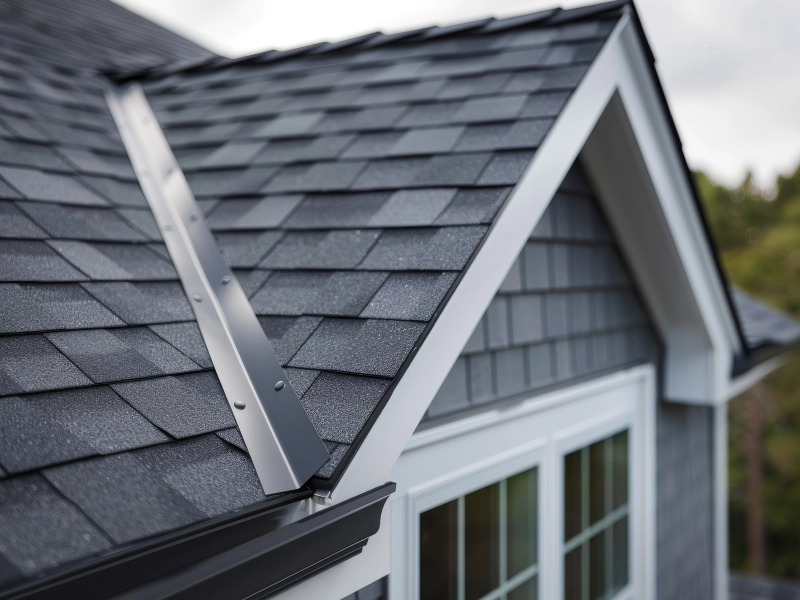
Where Flashing is Used
Common examples include step flashing where a sloped roof meets a wall, counterflashing around masonry, valley metal, drip edge, and flashing around vents or skylights. Each detail has a specific job. The correct material and installation method depend on the location and roof design.
Flashing works by directing water
Good flashing does not try to stop every drop with a bead of sealant. It overlaps materials so gravity carries water onto the roof surface and away from openings. That is why the order of installation matters. A piece of metal in the wrong place can actually direct water underneath the shingles.
Why flashing problems develop
Leaks develop when flashing is missing, rusted, loose, punctured, reused when it should have been replaced, or installed without correct laps. Roof-to-wall areas are also vulnerable when siding or trim interferes with the flashing. Repairs by other trades can create problems if fasteners are driven through critical areas.
Why caulk alone is not the answer
Roofing sealants are useful in the right locations, but exposed caulk ages in sunlight and weather. Repeatedly covering a bad detail with more sealant usually postpones the leak instead of fixing it. A durable repair should restore the way water is supposed to flow.
What a proper inspection should include
An inspection should look closely at chimneys, sidewalls, headwalls, valleys, plumbing vents, exhaust vents, skylights, and roof edges. The attic can provide valuable evidence too. Staining or rusted fasteners may reveal a flashing problem that is difficult to see from outside.
When comparing roof estimates, ask how existing flashing will be handled. Some components may be reusable when they are in excellent condition and properly integrated, while others should be replaced. The contractor should explain the decision instead of hiding it under a broad line item.
A roof is only as reliable as its weakest transition. If you have a leak in Benton, Bryant, elsewhere in Saline County, Little Rock, or Sherwood, ARStorm Restoration & Roofing can document the flashing and surrounding roof conditions and explain the right repair—not just cover the area with more caulk.
